
Wine tasting on the north shore of Lake Balaton – when the landscape enters the glass
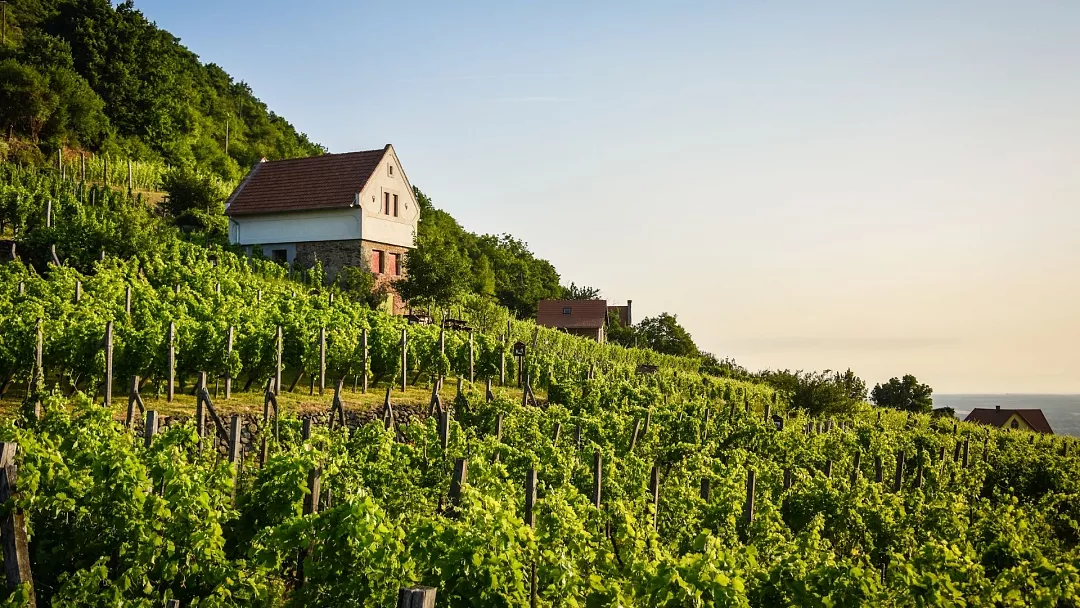
Lake Balaton has a quieter side. When the sun drops, the waterfront noise fades and the hills invite a different question: not what else can be squeezed into the day, but what deserves time. A glass of wine. A conversation. A landscape that has lived with vines for centuries.
Request a date and offerWine tasting on the north shore of Lake Balaton, close to Balatonalmádi.
Wine, place, vintage and story – explained without unnecessary formality.
The programme is discussed according to the requested date and group size.
Lake Balaton does not end at the waterfront
For many visitors Lake Balaton first means water, beaches, sailing and warm summer evenings. Yet the real character of the north shore continues a few kilometres inland, across hills, vineyards, old press houses and cool cellars. Here the lake is not merely scenery but part of the rhythm of the landscape.
A wine tasting on the north shore can therefore be much more than tasting several wines in sequence. At its best, it is an arrival into another pace: sitting down at the end of the day, paying attention to aroma and flavour and understanding why wine and the Balaton landscape have been so closely connected for generations.
That is why an evening like this often remains in memory differently from another rushed holiday programme. Instead of taking home only a photograph, you take home a flavour, a thought and a conversation.
Wine tasting on the north shore – not an exam, but an experience
You do not need to be a wine expert or memorise complicated aroma lists. What matters is openness, comparison, curiosity and enough time to pay attention. What do you notice in the first sip? How does the wine change after a few minutes in the glass? Why does one style become an immediate favourite for one person and say something completely different to another?
At Szörényi Winery the place behind the wine matters. Grape variety, vintage, vineyard position, weather and winemaking decisions all contribute to the character that finally reaches the glass. That makes wine tasting a genuine Balaton experience rather than something that could happen anywhere.
A tasting works best when it adds to the holiday or weekend rather than being detached from it. On the north shore, wine, hills and the proximity of Lake Balaton naturally belong together.
Felsőörs: close to Balatonalmádi, yet a different world
Felsőörs lies on the north shore of Lake Balaton, very close to Balatonalmádi. A short journey from the lively waterfront leads into the hills, where the landscape becomes calmer and more distinctly wine-country in character.
This proximity is especially convenient for visitors staying around Balatonalmádi who want a meaningful evening programme during a holiday, excursion or long weekend. The lakeside and the vineyards do not need to become two separate days: they can be two sides of the same Balaton experience.
Felsőörs sits naturally between the lake, the Balaton Uplands and the long wine-growing tradition of the region. You do not have to travel far to make the transition from beach time to wine-country time.
Already have a Balaton date?
Send us the preferred date, group size and type of occasion. We will reply with the currently available tasting options.
Terroir: when the place behind the wine becomes visible
The word terroir can sound more mysterious than it needs to. Its basic idea is simple: wine does not come into existence in isolation. Soil, relief, sunshine, rainfall, the climatic effect of the lake, the character of the vintage and human decisions all influence the grapes and, eventually, the wine.
This relationship is especially easy to understand on the north shore because the landscape remains present while tasting. Vineyards, varied geology and the proximity of the lake are not decorative background. One of the most rewarding moments is when the question changes from whether a wine is enjoyable to why it tastes the way it does.
The glass then becomes a kind of map, leading back to the vineyard, the year and the place where the wine began.
A couple’s programme, an evening with friends or a company wine tasting
Wine tasting is highly flexible. For two people it can be a calm and personal evening. With friends, discussion and comparison happen naturally around the table. For a company group, good wine and a distinctive place create conversation without the need for artificial team-building exercises.
The enquiry form allows you to provide the planned date, group size, type of occasion and any important details. This means the conversation starts with your actual group instead of forcing everyone into the same anonymous package.
For company dinners, team programmes, birthdays, weekends with friends or simply a more meaningful Balaton evening, it is worth sharing the likely date and group size early in the planning process.
How does an idea become an actual tasting?
To keep the programme personal and well organised, visits are available by prior arrangement. In the enquiry it is enough to provide the main details: preferred date, approximate number of guests, type of occasion and any relevant request.
If your Balaton date is fixed, enquiring early gives the best chance of finding the right option. If the date is flexible, mention that as well – it can make planning significantly easier.
The goal is not endless correspondence. It is to establish quickly and clearly what can be arranged for the requested date and group size at Szörényi Winery.
Lake Balaton tells a different story in every season
Summer brings long warm evenings. Autumn brings harvest and the particular atmosphere of the vineyards after the growing season. Winter makes the calm of the cellar more noticeable, while spring brings budbreak and the beginning of another vintage. The north shore is a wine region far beyond July and August.
Tasting opportunities naturally follow the rhythm of the seasons, so every visit should be discussed in advance. One thing does not change: a good wine tasting should never feel rushed.
Sometimes the most memorable Balaton evening is not the one with the best photograph, but the one where somebody pours one more small glass, nobody checks the time and it feels completely right to stay exactly where you are.
North Balaton wine tasting – frequently asked questions
Where is the wine tasting held?
Szörényi Winery is in Felsőörs on the north shore of Lake Balaton, close to Balatonalmádi. Visits are available by prior arrangement.
Is prior booking required?
Yes. Please send the preferred date and approximate group size so the current options can be confirmed.
Can company groups request a wine tasting?
Yes. Company programmes and larger groups can be discussed according to the date, group size and type of event.
Can a tasting be included in a holiday around Lake Balaton?
Yes. Felsőörs is close to Balatonalmádi, so a visit can fit naturally into a north-shore day trip, weekend or longer stay.
Do guests need wine knowledge?
No. Curiosity and enough time to pay attention are more important than technical wine knowledge.
Is wine tasting available outside summer?
Potentially yes. The wine region offers a different atmosphere in each season, but current visit and tasting possibilities should always be checked in advance.
Planning a visit or a wine-country programme?
Tell us the preferred date, group size and type of occasion. We will confirm the currently available tasting options at Szörényi Winery in Felsőörs.